

Two or Three (Other) Things I Know about Aida
How one opera topples several empires.
Last week, I wrote about an upcoming performance of Aida at Arizona Opera, which will set a generative-AI film version of Verdi’s plot against a concert performance. This post will make more sense if you read that first, as it looks at the genesis of the original opera, and how its themes of colonialism, imperialism, and plunder are reflected in GenAI.
For the last eight years, however, I have had one foot in the world of cultural criticism, and the other in the world of humanitarian reporting. Ethiopia, Sudan, and South Sudan are three contexts I’ve written about extensively in that time. For me, thinking about Aida means thinking about the ripple effect that opera had on the current crises in these three countries.
I.
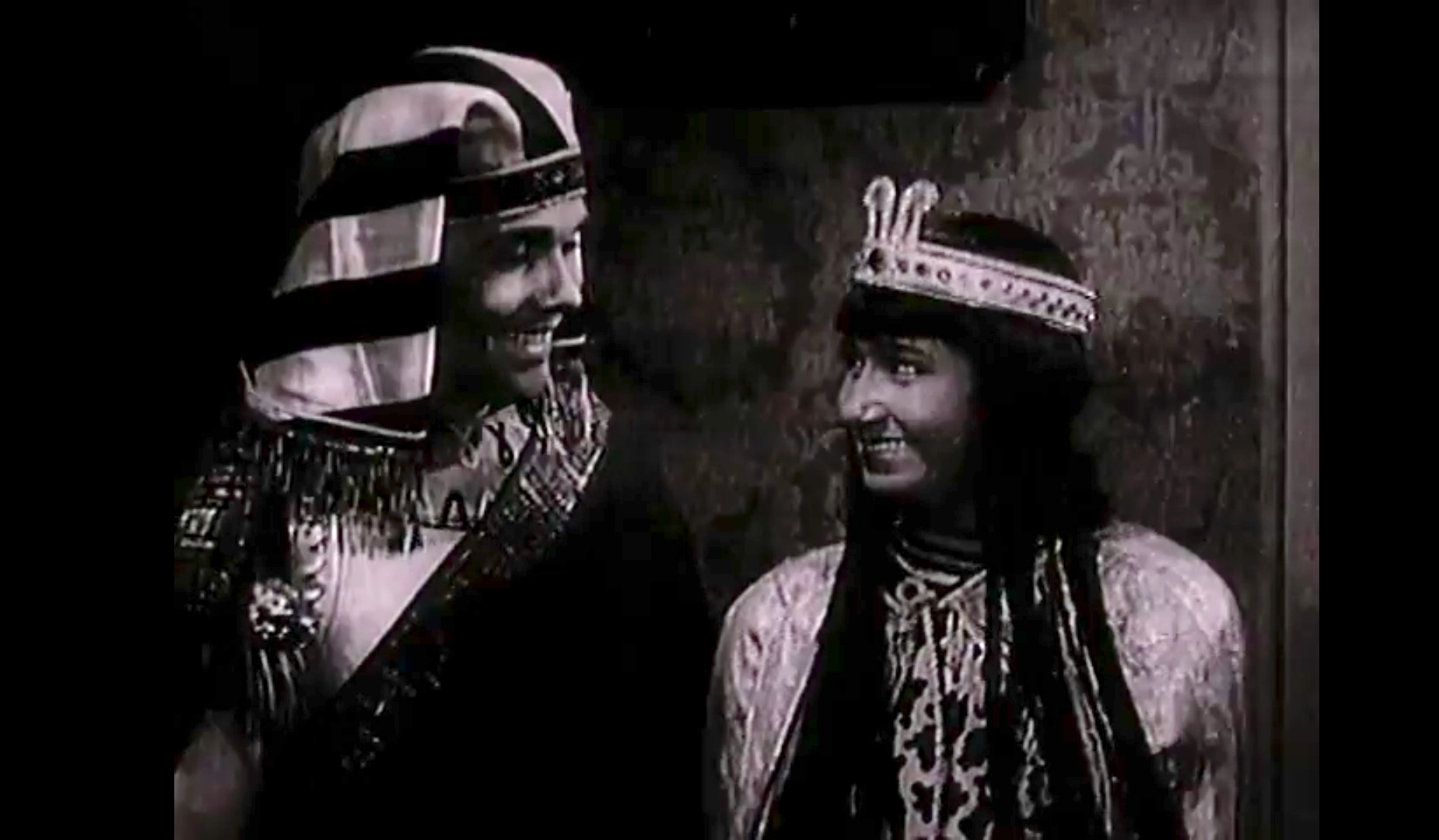
What purpose did Aida ultimately serve Isma’il Pasha and his vision for Egypt?
Less than three years after the opera’s 1871 premiere, Egyptian troops annexed Darfur as part of the Khedive’s vision for a new Egyptian empire. From there, they were prevented from furthering their advance into Ethiopia. This war, combined with the financial disaster that was the Suez Canal (long before its 2021 infamy) and the overall extravagant spending of Isma’il, evidenced in the fees for Aida plus the fast-tracked opera house it played in, led to the Khedive’s overthrow in 1879. He was exiled first to Naples, then to his palace in present-day Istanbul, where, as I mentioned last week, he was done in by two bottles of champagne and one last dream of conquest.
But the other implications of Isma’il Pasha’s power go even further. His attempt at a grand Egyptian Empire crumbled with his regime. Even before the Urabi Revolution began, British forces had been dispatched to Cairo to investigate the country’s financial struggles, leading to the establishment of a public debt commission to account for nearly £100,000,000, mostly owed to the United Kingdom and France. It was through British intervention that Isma’il was overthrown (initially replaced by his son, Tewfik Pasha), before Colonel Ahmed Urabi gathered enough steam to lead a revolt against both khedival rule and foreign imperialism. The fighting eventually turned into a full-fledged war with the UK that led to Egypt effectively a British colony until 1952 and the Suez Canal more or less operated as a French-British property until 1956.
In his book The Arabs, Eugene Rogan best sums up this immediate fallout of Isma’il Pasha’s regime in this oft-quoted passage: “The irony of the situation was that Egypt had embarked on its development schemes to secure independence from Ottoman and European domination. Yet with each new concession, the government of Egypt made itself more vulnerable to European encroachment.”
The connections to Aida go even further. At the turn of the 20th Century, the British and Egyptian governments, in figuring out what to do with their shared interests in Sudan (an occupation that grew out of the Ottoman conquest of Nubia), struck a joint-governance agreement that left the country another British colony. The British inherited a country divided along the White Nile River between a majority-Arab north and majority Black African south. The British focused efforts along the lines of missionary aid, development, and abolition on the north, under-servicing the south. Sudan only gained independence from both Egypt and the United Kingdom in 1954 (going into effect in 1956), which almost immediately prompted civil conflict within the country that eventually led to South Sudan gaining independence in 2011. However, the scars of European and Egyptian rule remain. To this day, scholars Jan Bachmann, Naomi Ruth Pendle, and Leben Moro write, “the landscapes of South Sudan are littered with decaying infrastructure projects of previous governments and political visions, seemingly pointing to a past of failed futures and the limits of government power. At the same time, the recurrent proclamations of temporary power through infrastructure have come to embody a form of permanent order in itself.”
Amid all of this, Aida plays out like a broadcast of Swan Lake on Soviet television, a seemingly apolitical distraction from history’s inconvenient truths. It’s not that Aida was a direct cause of the Suez Crisis, any more than it was the direct cause of Isma’il’s exile. But, much in the same way that Ludwig II’s obsessive (and expensive) Wagner fandom didn’t help matters when the government of Bavaria officially deposed its king, it serves as a symbolic domino in the lineup.
II.
Verdi’s Italy doesn’t get off scot-free in this aftermath. Aida premiered in Cairo on Christmas Eve, 1871 — about ten months after the end of the Risorgimento, when Rome became the capital of a newly-unified Italy. Even before the Suez Canal had opened in 1869, there were Italian outposts in northern Africa, with Assab Bay established in present-day Eritrea two days before the opening of the canal. It officially became a colony, however, in 1882, three years after Isma’il Pasha was overthrown, and at a time where the Egyptian hold on Eritrea was loosening amid so many unpaid soldiers and competing priorities closer to home.
Italy moved to take more land in this vacuum, fighting an unofficial war with Ethiopia between 1887 and 1889 before a border was drawn up separating Ethiopia from what became known as Italian Eritrea. Italy broke with the treaty six years later when it would try to invade Ethiopia at the height of the Scramble for Africa, a war that lasted just under two years and ended with Ethiopian victory — the country would be one of just two to avoid European colonization in this era.
What Verdi felt about these wars, which came in the final decades of his lifetime — and, in the case of the 1887 war, coincided with the world premiere of his Otello — doesn’t appear in any of his collected letters, at least as far as I could find. At the time of the second war, Benito Mussolini likely didn’t have any particular thoughts about either the war in general or Italy’s defeat — he was 13 at the time. However, Ethiopia became a Greenland-like fixation for Mussolini as he gained power. Like Isma’il Pasha, he became obsessed with reviving an ancient empire — in his case that of Rome (epitomized in a movement later known as the cult of romanità, a good counter argument to the idea that a Roman salute is just a Roman salute).
This culminated in 1935 when Italy launched a second invasion of Ethiopia, forcing the country’s regent, Emperor Haile Selassie, into exile and forming — along with Eritrea and parts of Somalia — the territory known as Italian East Africa. Entire towns were “liquidated,” hundreds of thousands of Ethiopians (largely civilians) were killed, and Mussolini’s troops violated several key rules of war, including using mustard gas and attacking hospitals and Red Cross stations. All of this has, according to some experts, amounted to an unspoken genocide operating in the background of the Holocaust. Blackshirts turned Addis Ababa “into a circle of hell,” writes academic Emanuele Ertola, “an orgy of brutality that has few comparisons even in the history of European colonialism.” Ertola also quotes a British eyewitness when he adds: “With this slaughter were combined loot and pillage.” The return of fascist troops to Rome, with countless artefacts of Ethiopia in tow, would have mirrored the triumphant march in Aida.
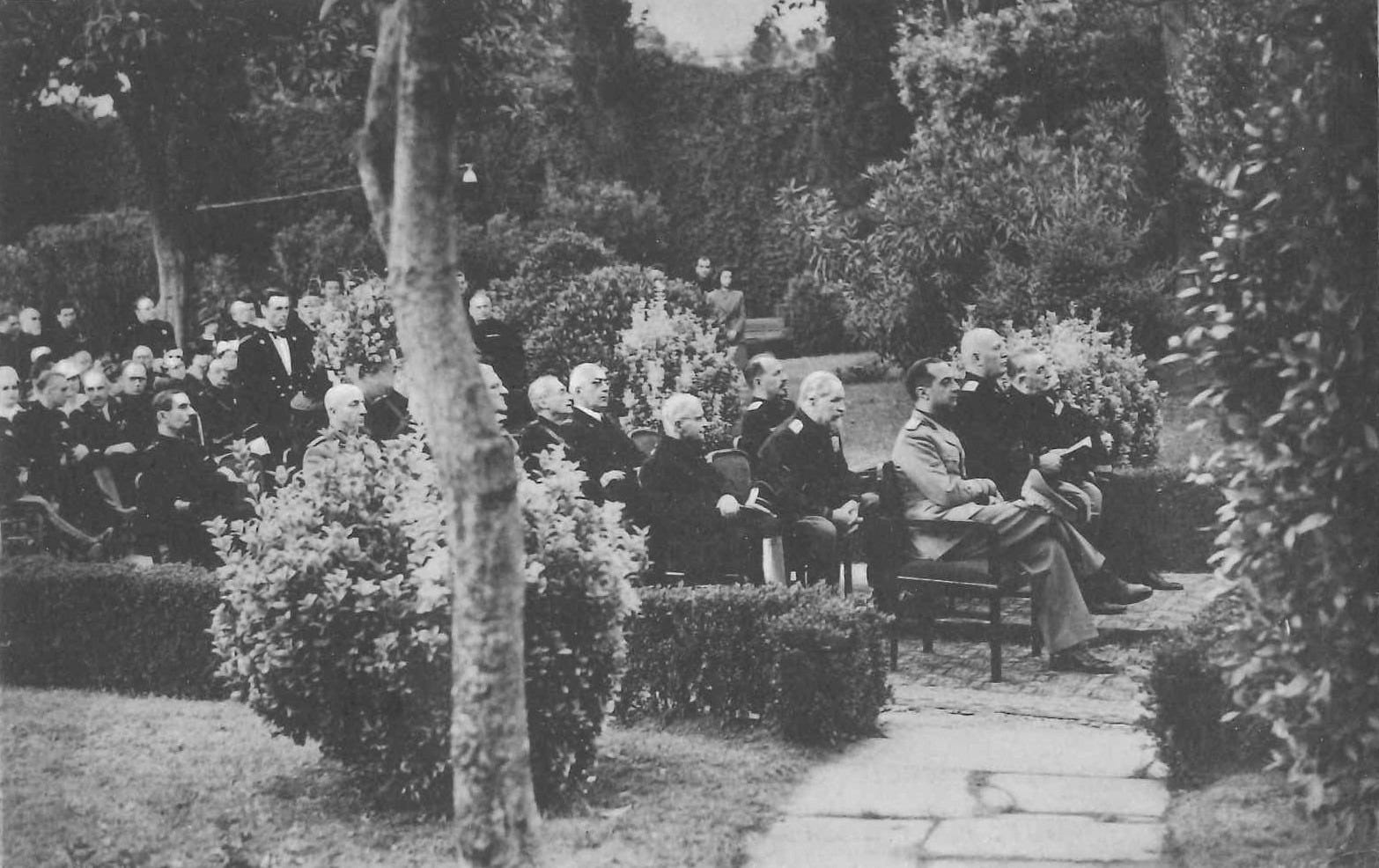
In fact, Mussolini could have easily insisted that such a connection be drawn: Just as Verdi became an icon of the Risorgimento, so too did he become a forefather to Fascist Italy, especially in 1941 — the fortieth anniversary of the composer’s death. An Anno Verdiano was planned in both Italy and abroad, which Gabrielle Prud’homme describes as “a significant display of cultural propaganda…which responded to the Duce’s own sill to celebrate a figure carefully molded on the fascist and totalitarian project.” In the grand tradition of music (or, in this case, the idea of music) wielded as a cultural weapon, the celebrations kicked off in earnest on June 4, 1940 with an exhibition that reframed Verdi as an ideological forerunner to Mussolini’s brand of fascism. The cornerstone of the displays was a set of 365 letters, written between 1859 and 1890, by Verdi to Senator Giuseppe Piroli, which had been donated to Mussolini by Piroli’s family and, in turn, donated by Mussolini to the Academy of Italy (which he himself had set up in 1929 “in order to preserve the national purity of Italian culture”).
The event was foregrounded by a lecture from Alessandro Luzio, with a concert (including a sinfonia from Aida) presented as an afterthought. Indeed, Prud’homme notes, “the time allotted to Luzio’s speech was greater than the duration of the concert,” and gave the Verdi scholar ample time to draw connections between Verdi’s place in the Italian cultural imagination and the aims of the fascist project. “By stressing the idea that the Duce was the head of state foreseen by Verdi to stimulate Italy’s artistic and socio-economic life,” Prud'homme adds, “Luzio suggested that the composer had anticipated, and even wished for, the fascist takeover.” Less than a week after this celebration in the Italian capital, Mussolini broke with Italian neutrality towards World War II and declared war on France and Britain.
Underscoring this decision, and the larger war effort, was a weaponization of the past and nostalgia, one that was epitomized by Verdi. For the next year, celebrations of his work — including multiple Aida performances — would accompany a military campaign that eventually ended with nearly half a million Italians killed and Mussolini, along with his mistress and several of his cronies, shot and strung up for posthumous public evisceration in Milan’s Piazzale Loreto. In 1951, Verdi was celebrated once again on the 50th anniversary of his death, as a hero of post-War Italy, dubbed by some as a second reunification. Prud’homme notes that much of the same rhetoric and framing devices from 1941 were used once again, a sign of collective amnesia in post-fascist Italy. This is how history repeats itself. Aida remained the most-performed opera at the Teatro dell’Opera di Roma from 1900 to 1950.
Above: The Act II finale from Aida in Mexico City, 1951, where Maria Callas, as Aida, sings a high E-flat (an octave above Verdi’s score). In “The Imperial Spectacle,” Edward Said considers this moment as one example of “the core of Aida’s egregious appeal to audiences and directors alike, who take [this scene] as an opportunity to do more or less anything so long as it is excessive and full of display.”
III.
“When Italy’s fascist dictator Benito Mussolini marched his army into Ethiopia in 1935, he came with men who were enticed by a message: they could have beautiful Ethiopian women as spoil,” writes Otosirieze Obi-Young, the founder and editor of Open Country Mag. “The men marched in, singing about the women, carrying cameras to document what promised to be an adventure, a hope to reimagine themselves in the lives of the women, as masters and takers.”
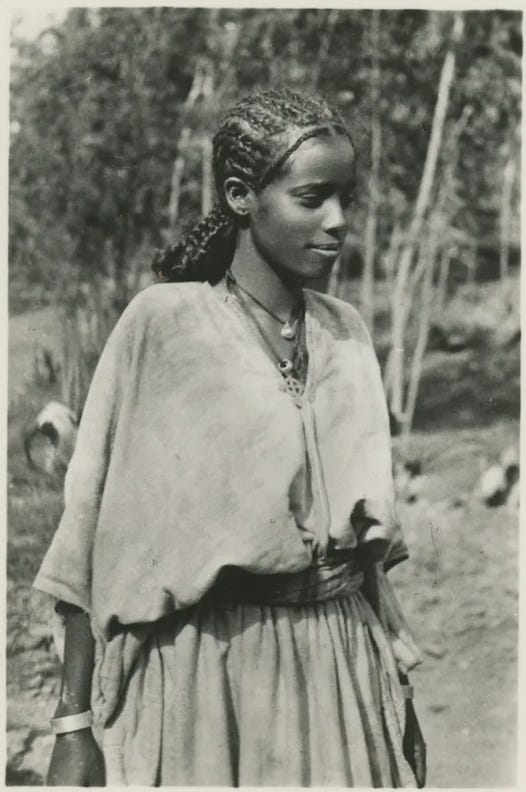
This provides the setting for Maaza Mengiste’s 2019 novel, The Shadow King, documenting a period in history where, instead of becoming spoils of war, many Ethiopian women took up arms and became active combatants. (One defender, who sued her father for the right to fight, was Mengiste’s great-grandmother.) Struck by the image of one anonymous woman from this era — as captured by an Italian photographer — Mengiste imagined a world where this woman, whom she named Hirut, uses the same gun her father had in the first Italo-Ethiopian War, eventually defending a lookalike for Selassie (in real life, an impoverished musician).
It’s a conscious rebalancing where, in Mengiste’s words, the Ethiopians documented in her family’s collection of photographs “begin to speak back to the European holding the camera.” She extends this Italy-Ethiopia connection by making Aida a recurring leitmotif in the novel, primarily through Selassie: “In the months since Benito gave his orders to invade, the emperor has done nothing but buy the music of the Italian people, sending his servants by train to Djibouti, Sudan, Somalia, Yemen, and Eritrea to collect the 78s and bring them back. Now there are three heavy boxes waiting to be moved with him, neatly catalogued.” As the Italians advance on Addis Ababa, he listens to Aida.
The record travels with him to the frontlines in Wollo and Tigray. In a cave used as his headquarters, he abandons the Bible and prayers in favor of repeated, talmudic listenings of the arias. He feels a kinship with Amonasro who, like him, is an emperor “growing old before his years.” He pities Aida as a “foolish believer in torn loyalties,” too naïve to see that her love for Radames only serves to keep her people enslaved: “Is it possible you do not know the duties of one born of royal blood?” This is an especially pointed remark for Selassie to make, having brokered his 14-year-old daughter, Zenebework, in a political marriage to a man ten years her senior, Haile Selassie Gugsa. “He did it for power. He did it to create an alliance with a rivaling family,” Mengiste said in an interview with Brick. Zenebework was reportedly miserable. “She was sending these messages back home saying, Please, please get me out of here. They’re not treating me well. I’m not doing well here,” Mengiste adds. “Haile Selassie chose not to get her.”
She died suddenly in 1934, at the age of 16. The following year, when Italy invaded Ethiopia, Gugsa joined with the Italians.
In his obsessive listening, Mengiste’s Selassie ignores the incongruities of Verdi’s score, of his musical concepts of Egyptianness and Ethiopianness. Each morning, the needle drops on the 78 once again, “in order to find what it is that Aida has managed to keep hidden.” Then it dawns on the emperor: Aida herself hasn’t hidden anything. Rather, Aida the opera has, by virtue of the circumstances of its own creation, revealed something about Italy: “They have been weaned on lies set to music. They imagine this country full of Aidas and desperate kings willing to leave their people in enemy hands.” He resolves to show Mussolini that his is a country “full of soldiers and leaders who charge rather than retreat, who will die on their feet rather than bow to save their lives.” So overcome by this revelation and the impetus it delivers him, he pulls the LP from the gramophone and throws the disc against the cave wall. In a moment of disquieting historical augur, it doesn’t break.
In reality, Selassie did eventually retreat, amid controversy. He entered exile in 1936 though continued to advocate on behalf of his country at the League of Nations, which offered little by way of support until Italy sided with Germany in 1940. Ethiopian Resistance fighters and Allied forces eventually drove out Italian forces the following year, reinstating Selassie on the throne. Opinions differ on his legacy, and that of the Ethiopian Empire, which fell in 1974 when the Soviet-backed Derg deposed (and ultimately killed) Selassie, ending centuries of the Solomonic dynasty. “Inspired by this ideology, Ethiopian kings and emperors have conquered lands and enslaved ethnic groups,” writes historian Yohannes Woldemariam.
The fall of Selassie, which led to the deaths of three of her uncles, forced Mengiste herself into exile (though she still debates whether she is more accurately an immigrant or a refugee, whether her family fled or transferred). She covers this period in her first novel, Beneath the Lion’s Gaze, but alludes to it in another interlude in The Shadow King. As protesters gather across Addis Ababa, Selassie “sits in his office winding his gramophone, waiting for the final act to push Aida and Radames into the cave and into the last song.” The music brings him back to his own glory days, when he made his own triumphant march back into his country from exile. He imagines Amonasro in the room with him. “You fought a war they started,” he tells Aida’s father. “You were forced to do as you did. But their songs will never tell the entire truth. They will never sing of their own corruptions.”
When I first read this scene, in the similarly waking-dream atmosphere of the summer of 2020, I felt a kinship with Aida that I previously had never experienced in an opera house. Mengiste pulled off an almost physically-impossible rebalancing of substance and spectacle. In his Prison Notebooks, Antonio Gramsci singles out Verdi — “or rather the libretti and plots of the plays set to music by Verdi” — and opera in general for “a whole range of ‘artificial’ poses in the life of people, for ways of thinking, for a ‘style.’” Opera, for Gramsci, was a poor alternative to an Italian literary style, an excuse to escape the realities of life (which 19th-century novels in other countries underscored) “in order to enter a more select sphere of great feelings and noble passions.”
Gramsci doesn’t mention Aida by name, but this is the work that comes most readily to my mind when reading this passage, perhaps augmented by Verdi telling Camille du Locle: “I want art in any of its manifestations, not the arrangement, the artifice, and the system that you prefer.” To me, despite the work’s obvious beauty and pageantry, Aida has always been a work of artifice. It was also a work commissioned as a means of reinforcing the system of empire. But it is also, undeniably, a work of art — that has outlived empires, and one through which we can understand how those empires functioned. “To copy truth may be a good thing, but to invent truth is better, much better,” Verdi wrote to his friend and close confidante, Countess Clara Maffei.
He was, in that line, talking about the nature of art as opposed to documentary. Anyone who still insists that art be free from politics will do well to note that politicians throughout history have made use of this tactic as well.