

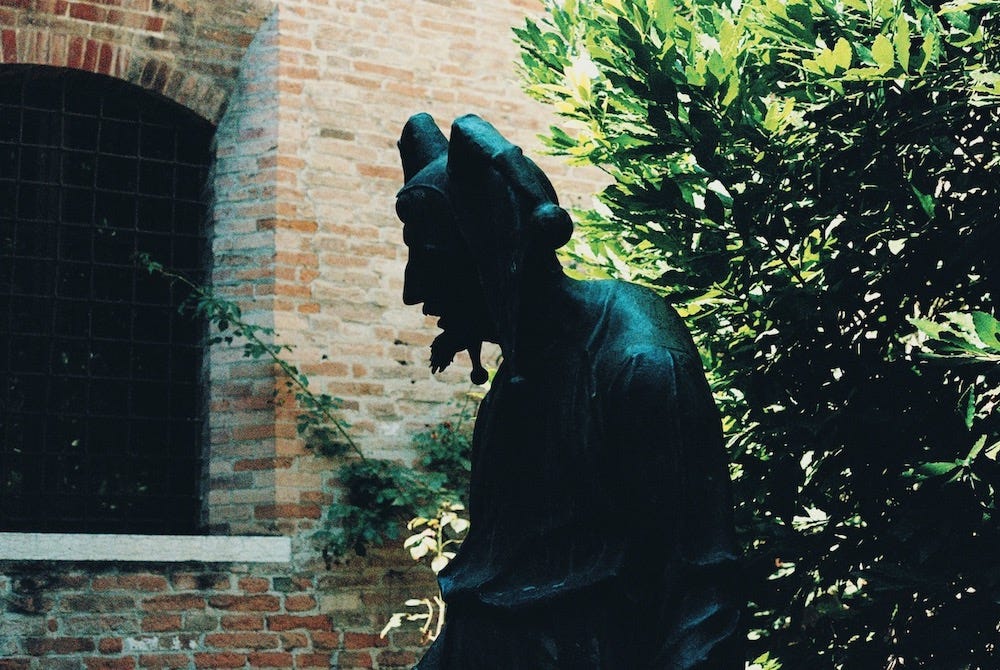
Last month, I took about 12 hours’ worth of trains to get from Berlin to Florence, where I reviewed Luca Guadagnino’s The Death of Klinghoffer at Maggio Musicale Fiorentino for the London Review of Books (a few more thoughts on that coming next week). Since I had exhausted half a day of my life to get to Italy, I decided to tack on a few more days and head up north to Mantova, where I have been mentally for the last two years as I work on a creative project based on Rigoletto.
I last went to the city of Verdi’s tragedy two years ago, during the dog days of summer. I stood in front of an industrial-sized fan in the Palazzo Ducale that did nothing but push out more hot air, lived on a diet of risini and freshly-squeezed orange juice at a marble-countered coffee bar, and drove across the surrounding flatlands during a series of spectacular late-night thunderstorms. You get why Verdi replicated this weather pattern in the final act, and why he used the male chorus to achieve this musically.
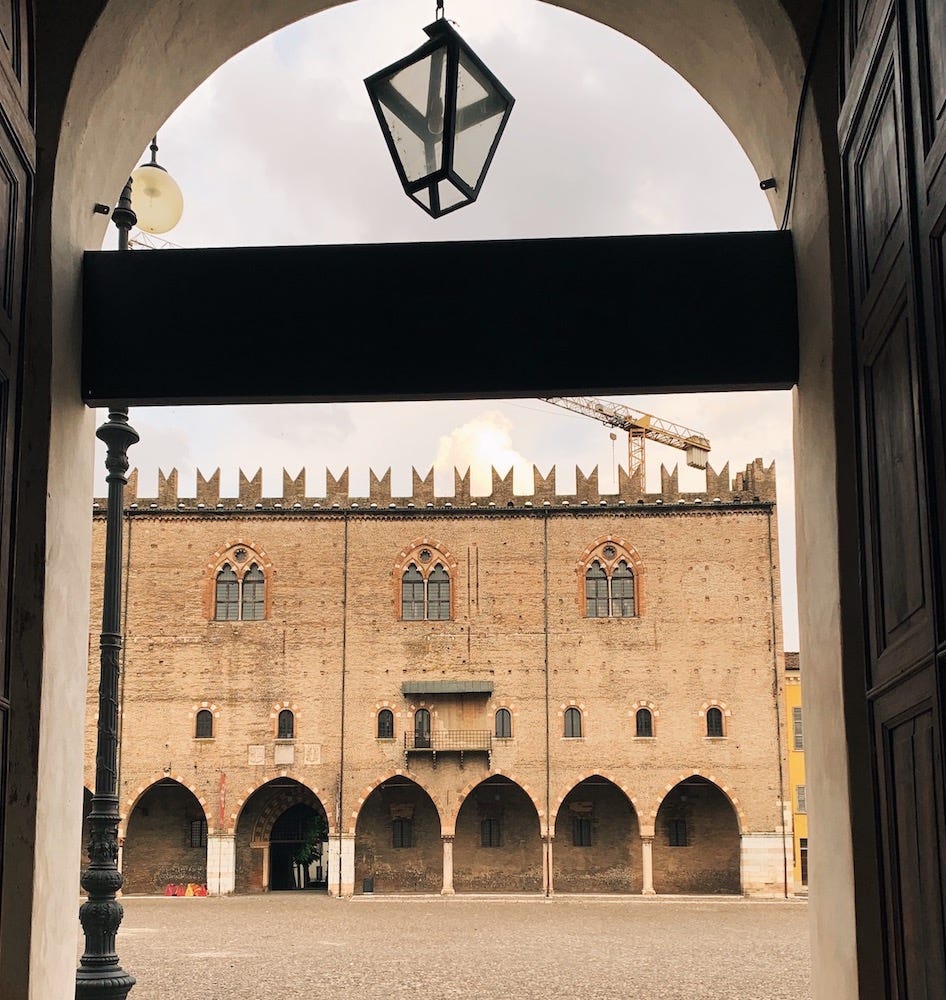
Verdi’s opera is based on the Victor Hugo play, Le Roi s’Amuse, which was set in the court of King Francis I of France. If you are an elder millennial/latter-day Gen Xer like myself, you will recognize this character as Prince Henry’s father in Ever After, though he’s in his younger and wilder days in Hugo’s play.1 However, the censors wouldn’t let Verdi or librettist Francesco Maria Piave keep the royal setting, so they transposed the action to the lesser duchy of Mantova.
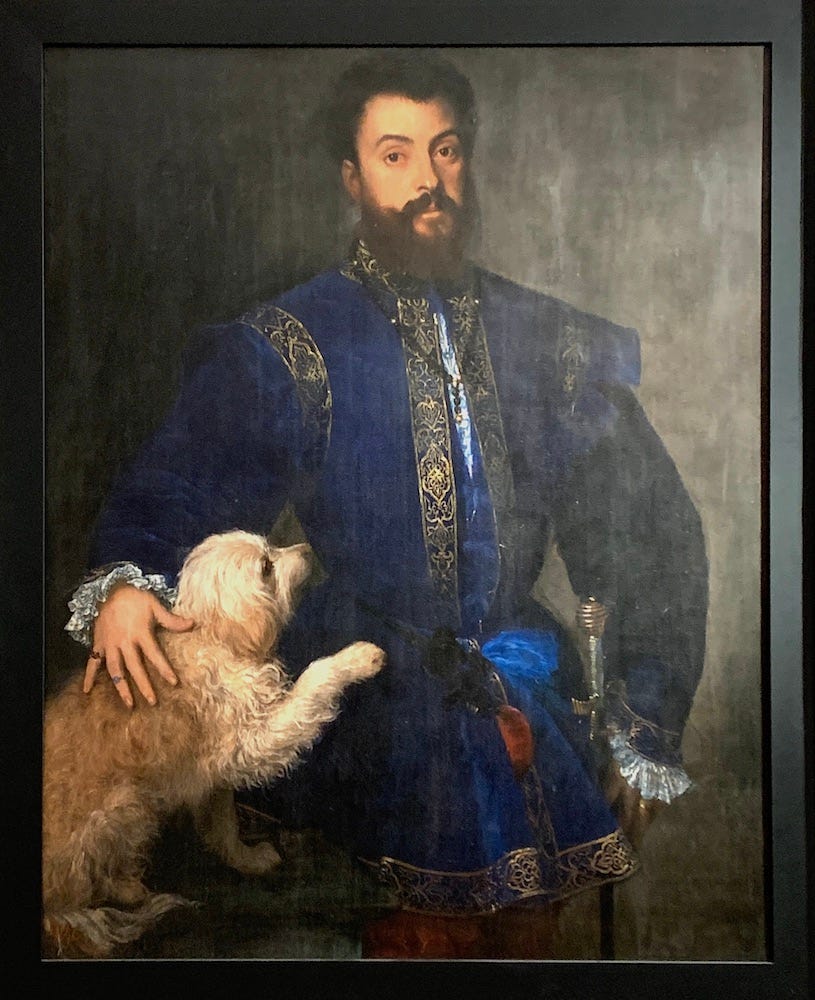
In a way, this was a homecoming for Verdi. Mantova is about 50 miles east of Busseto, the composer’s home turf. He was born long after the Gonzaga family’s rule came to an end after nearly 380 years, but in certain ways the legacy of this dynasty mapped solidly onto Francis I’s reign of absolutism.
“Mantua2 has no university, no great fame for learning like Bologna,” writes Kate Simon in A Renaissance Tapestry: The Gonzaga of Mantua, “nor is it perfumed with aestheticism like Florence.” Still, the city manages to have not one but two grand palaces: the Palazzo Ducale and the Palazzo Te.
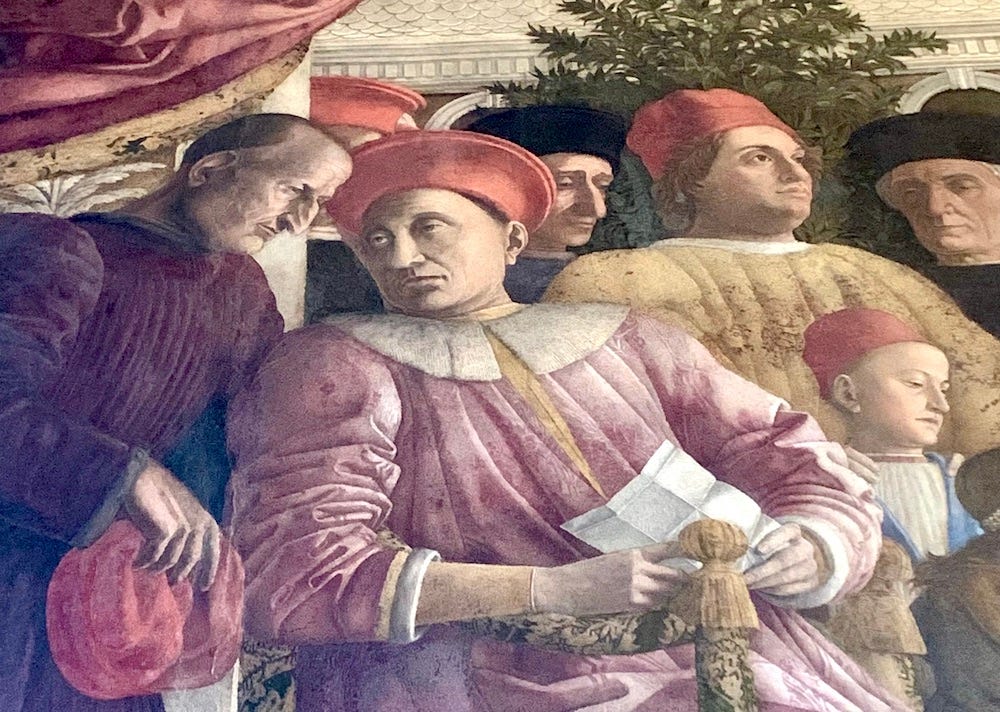
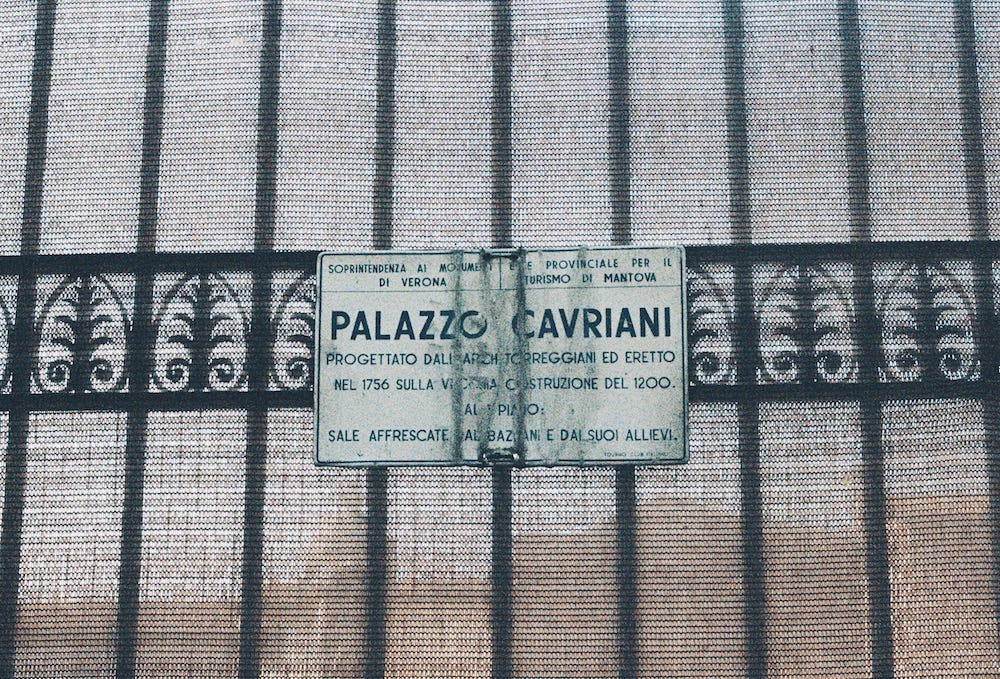
The ducal palace was initially built in the early 1300s by the Bonacolsi family, but with the ascendance of the Gonzagas in 1328, they soon began to take over its development, which continued into the 1700s. It is absurdly sprawling, but also mostly bare; perennially cash-strapped, the Gonzagas often sold off their art and furnishings to cover debts. (The last Gonzaga duke, Ferdinand Carlo, also took a great deal with him when he fled to Venice in 1707.) If you give more than a passing glance to many of the walls, you’ll realize they’re not even actual marble — it’s a trompe l’oeil effect.
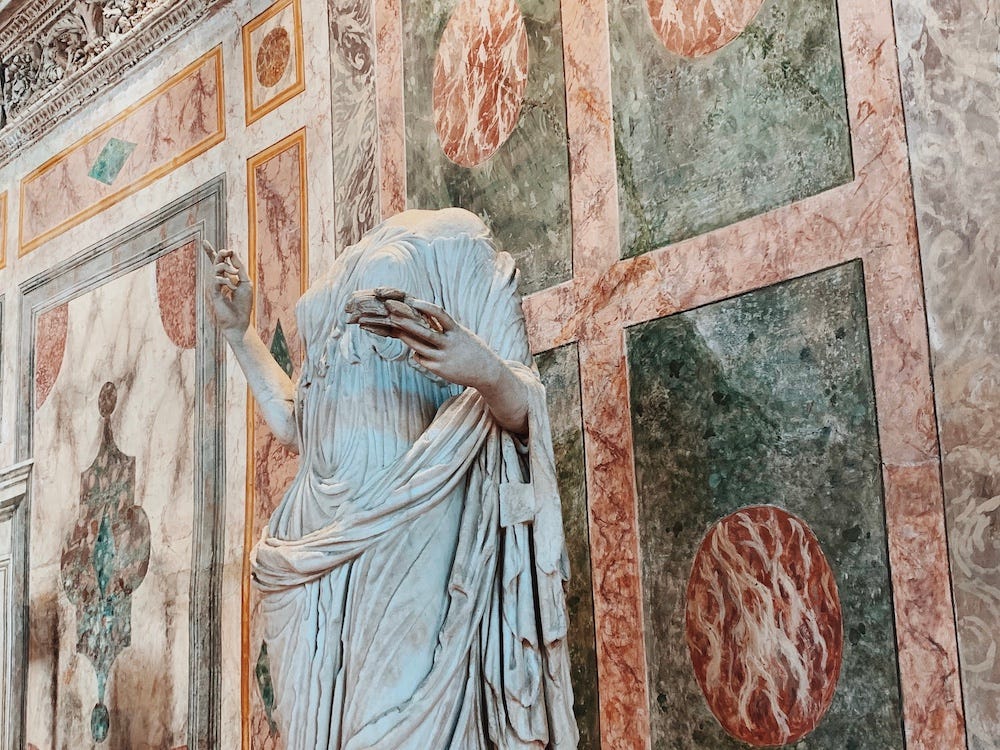
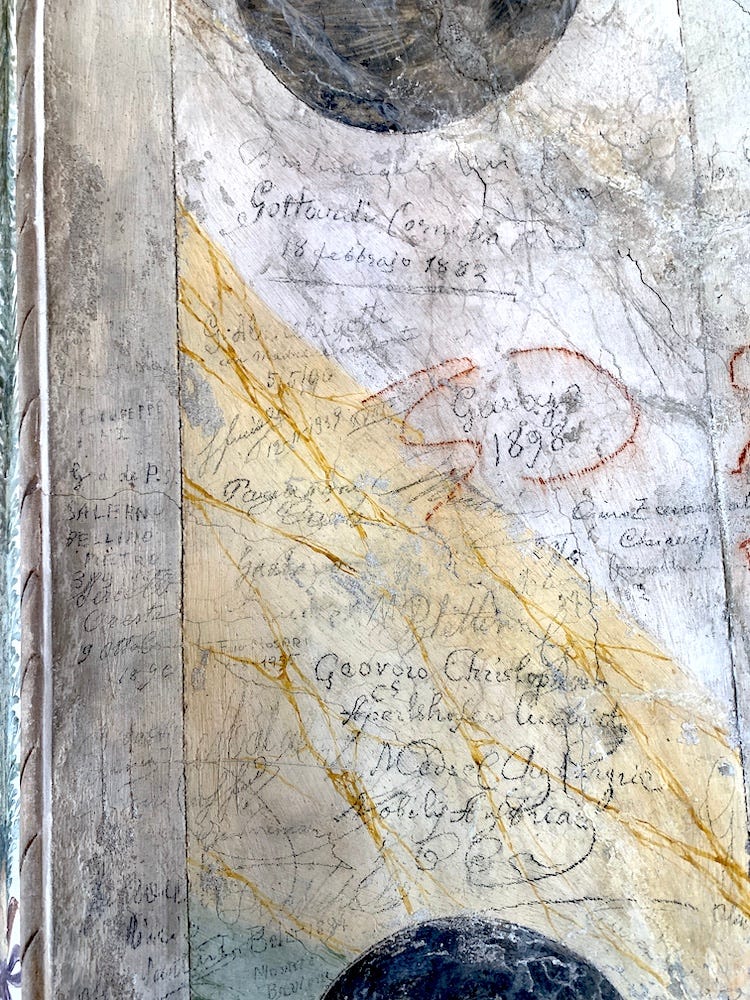
Consider that in contrast to the facade of the Duke of Mantova’s court in Act I of Rigoletto: “On the surface,” writes Roger Parker, “the banal sequence of dance tunes…merely creates the necessary festive atmosphere; on a deeper level, however, the very emptiness of the music is particularly apt for a Ducal Court where the pursuit of pleasure is all-consuming.”
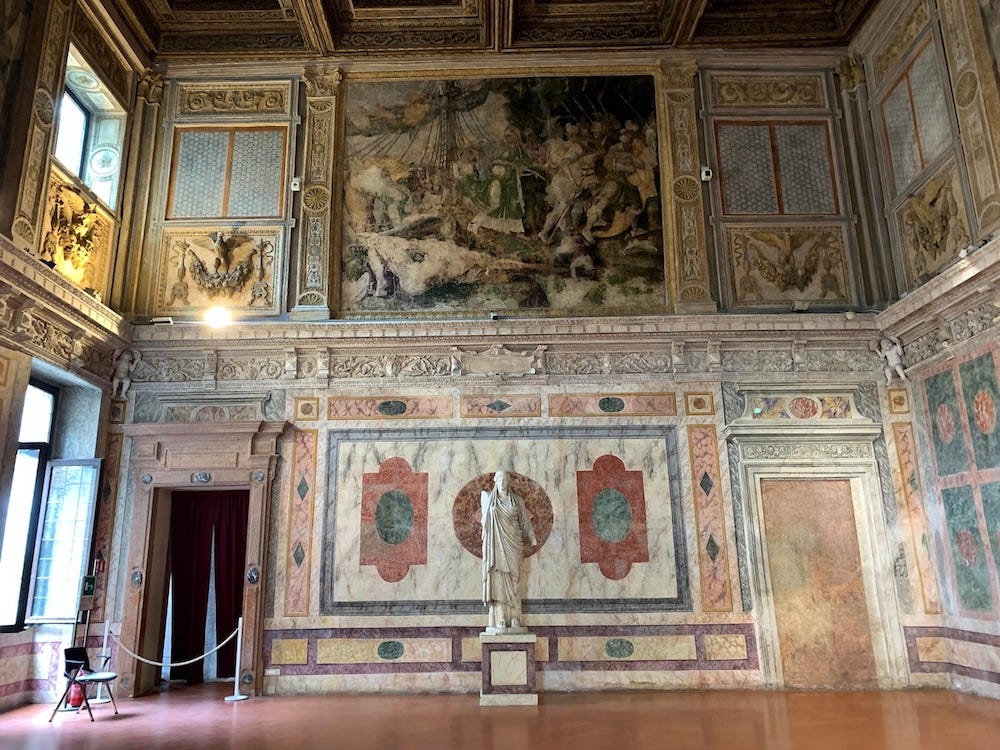
It’s easy to picture the opening scene unfolding in this room, the Sala di Manto, named for the daughter of Tiresias who fled Thebes and landed in the marshes of Lombardy, which soon became the city that bore her name.
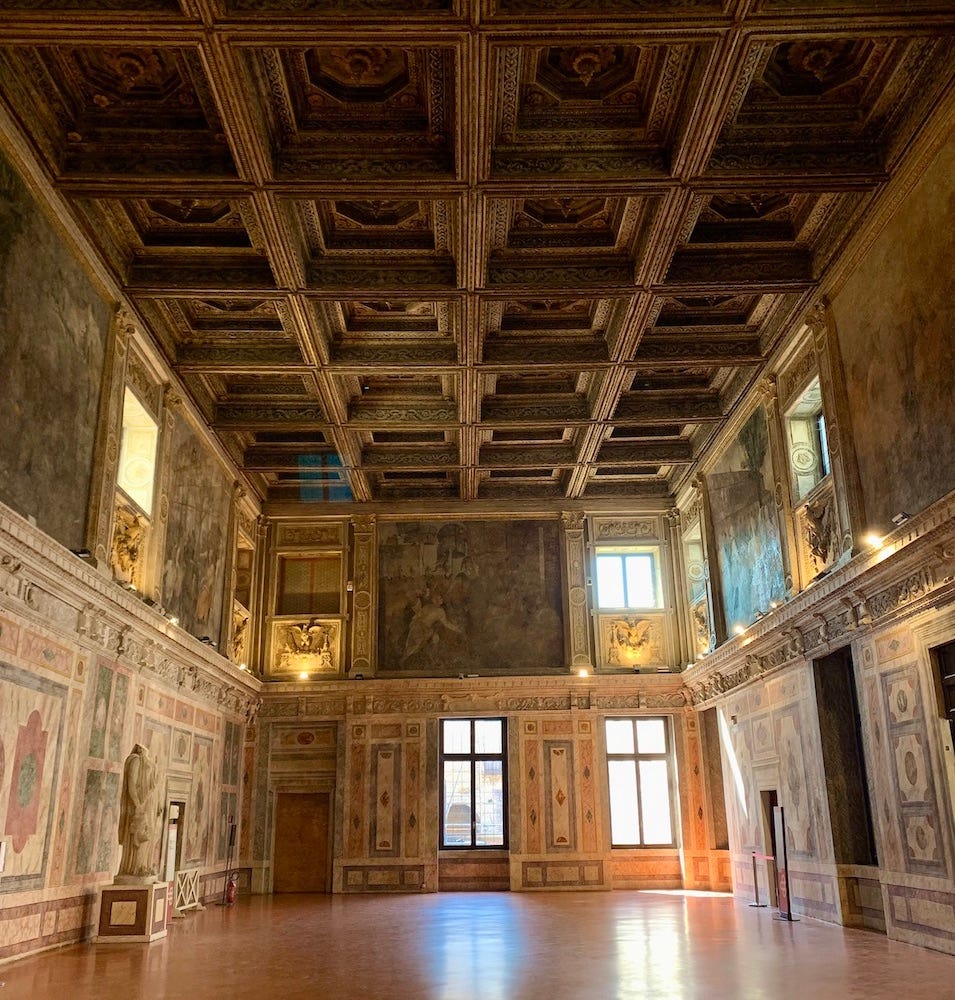
The foundation of Mantova is depicted on the murals, surrounded by faux-marble panels. And would she, the daughter of the man who saw all in Oedipus Rex, have not seen Rigoletto coming?
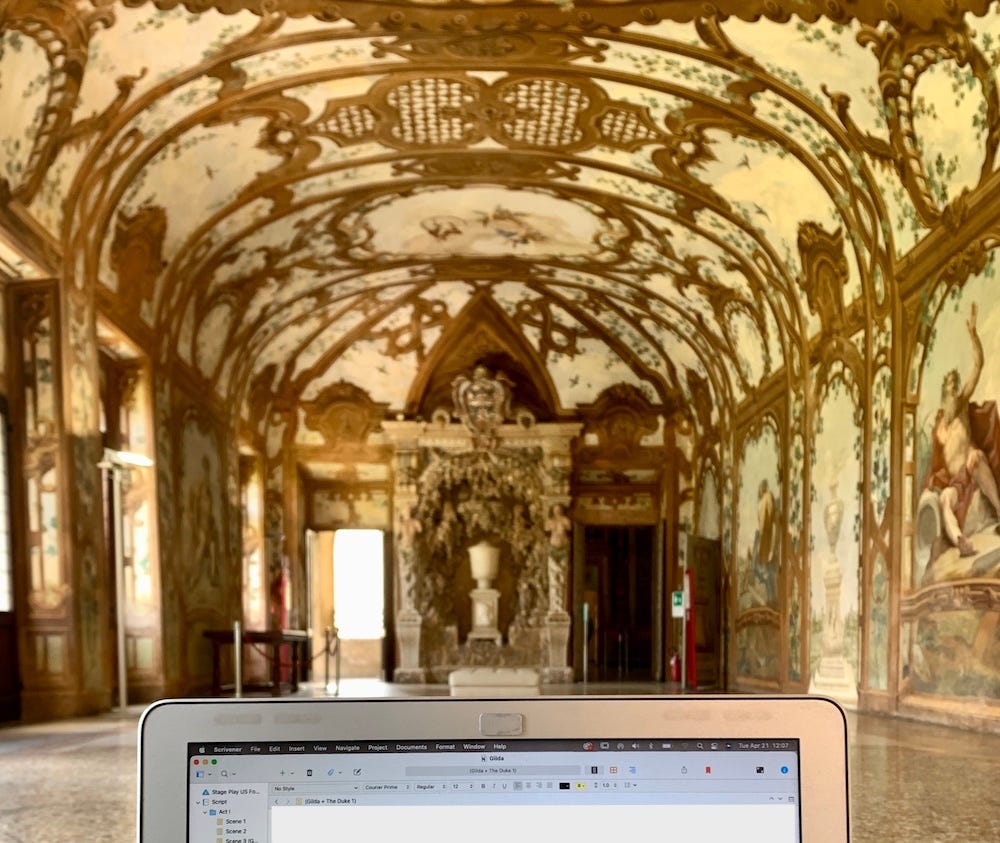
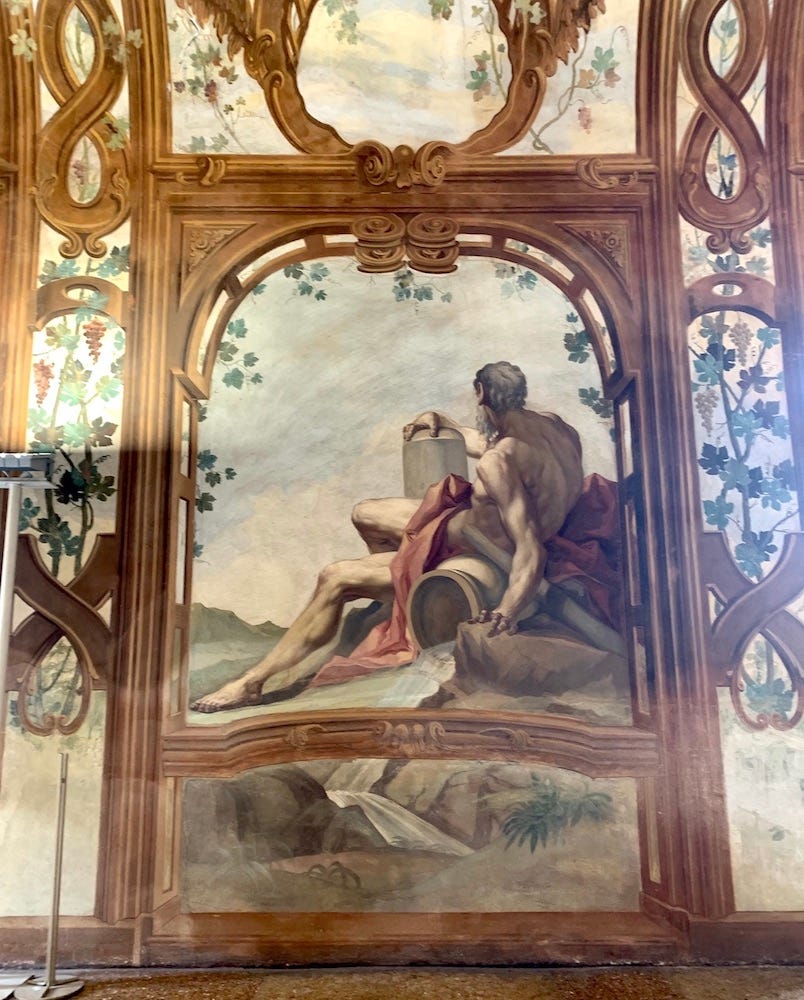
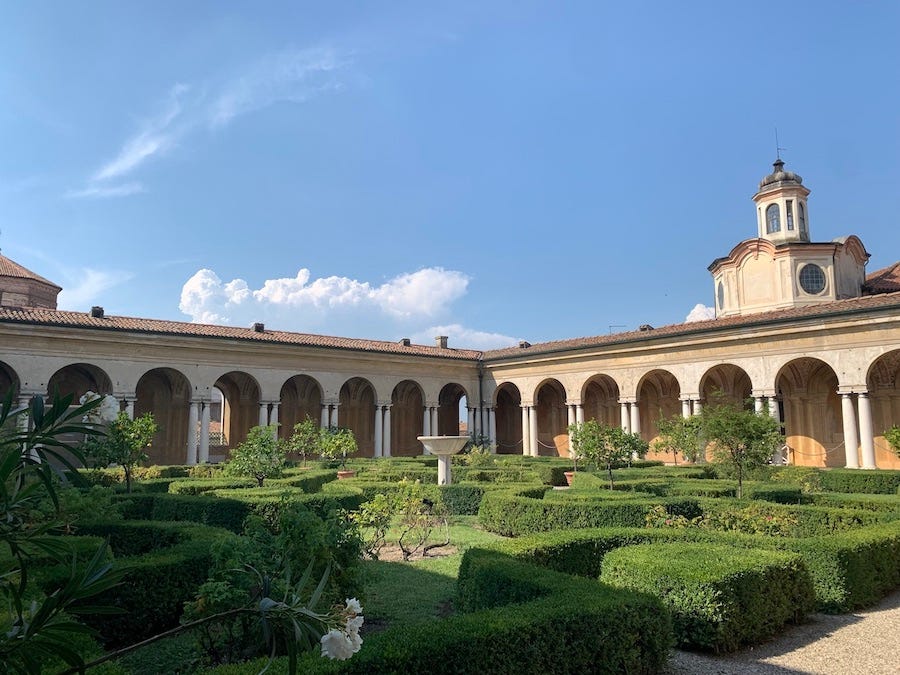
This room, the Hall of Rivers, was designed after the Gonzaga empire fell and the Habsburgs moved in, but also has a trompe l’oeil effect, as if the garden it overlooks is flowing directly out of its lattice-work arbors, complemented by human depictions of the six rivers that flow in Mantovan territory.
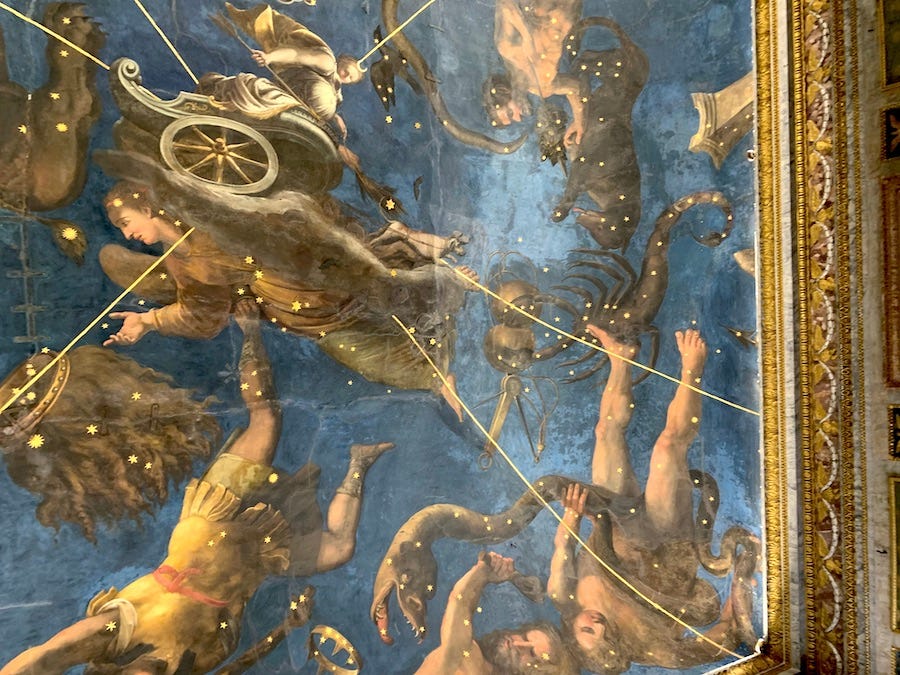
It’s also flanked by two bedrooms: One that served as the apartment for Duke Guglielmo Gonzaga, whose ceiling is a staggering fresco of Diana’s carriage being carried through the Zodiac.
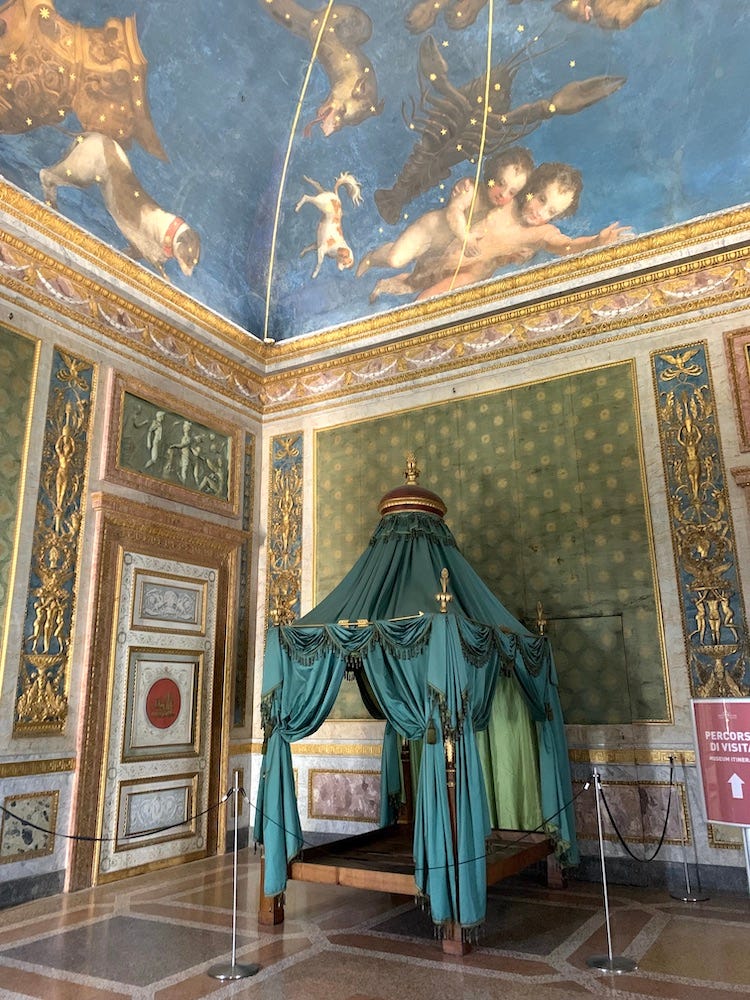
As I imagined Gilda being deposited into this room for the Duke’s pleasure by his cronies, I noted that the rest of the apartment had been redecorated when it served as the bedroom for Napoleon I.
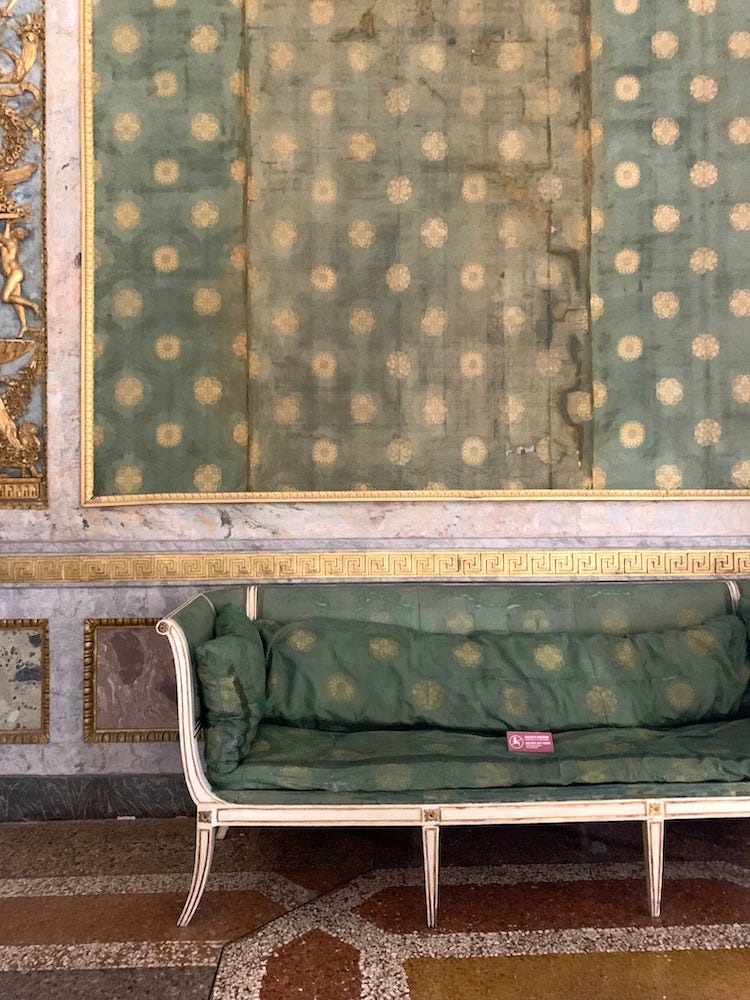
On the opposite side is what’s known as the Empress’s Apartment, where you can see the full Habsburg transformation. “The premiere of Rigoletto at the Teatro la Fenice in 1851 took place in a city still bitter with the sense of humiliating surrender after the months of resistance to the siege which followed the heroic revolt against Austrian rule in 1848,” writes Jonathan Keates in his introduction to the ENO Opera Guide to Rigoletto.
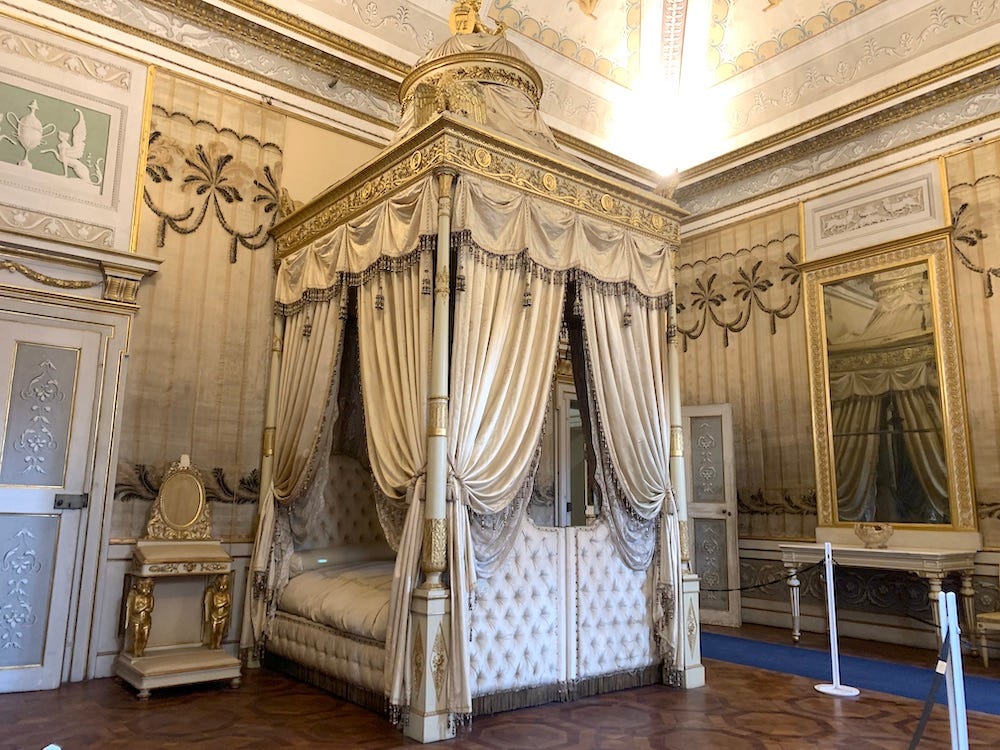
The size of the Hall of Rivers would make it a logical space to stage Act II, with the Duke overlooking his wife’s gardens while singing “Ella mi fu rapita,” soon to be interrupted by his courtiers.
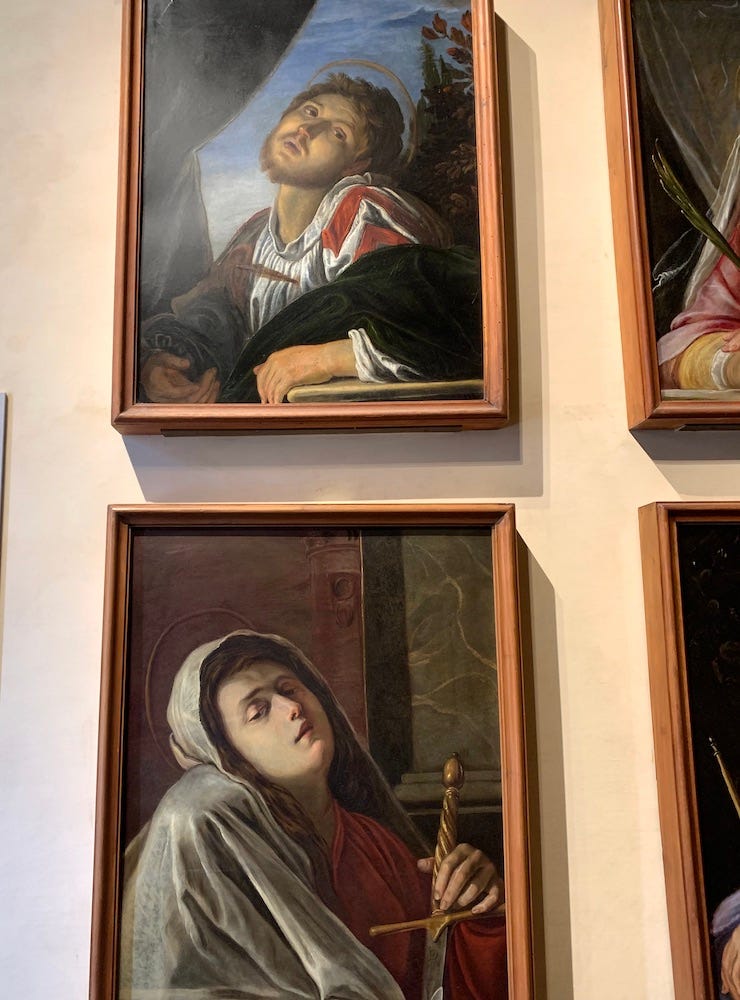
The actual Duke of Mantova that seems to be the basis for Verdi’s Duke is Vincenzo I (1562-1612), who had his own connection to the birth of opera via an encounter with Galileo Galilei, son of Camerata member Vincenzo Galilei.
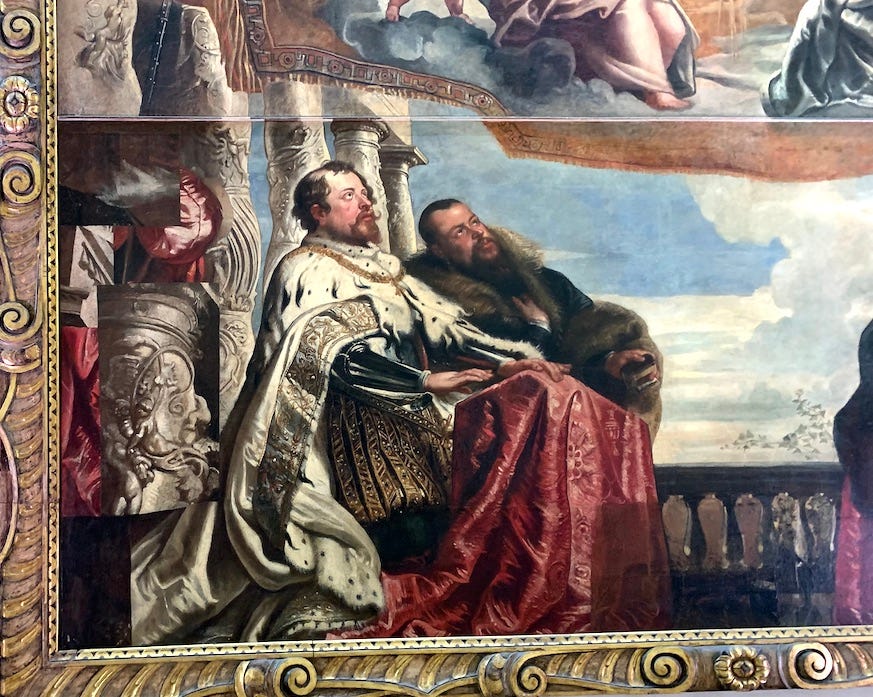
Vincenzo I’s first marriage to Margherita Farnese ended in a humiliating divorce after they failed to consummate the union. His second marriage, to Eleonora de’ Medici, was almost over before it was arranged over concerns that the sexual failure was his. As historian Maria Maurer writes, “The Prince’s physical body was a sign of his political body, and thus Vincenzo’s inability to sustain an erection and deflower a virgin signified his inability to rule.”
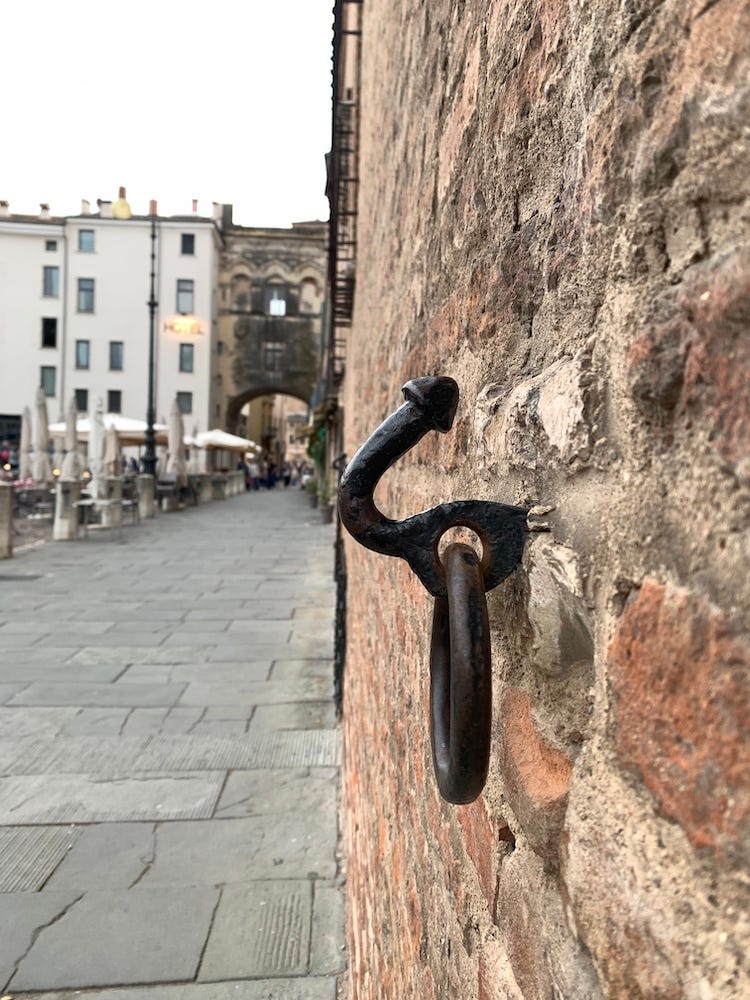
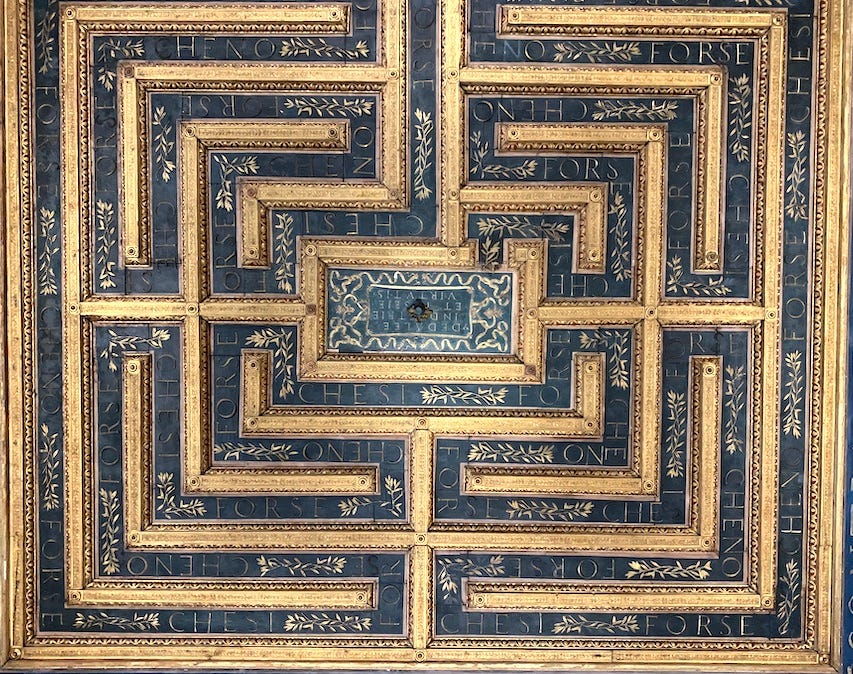
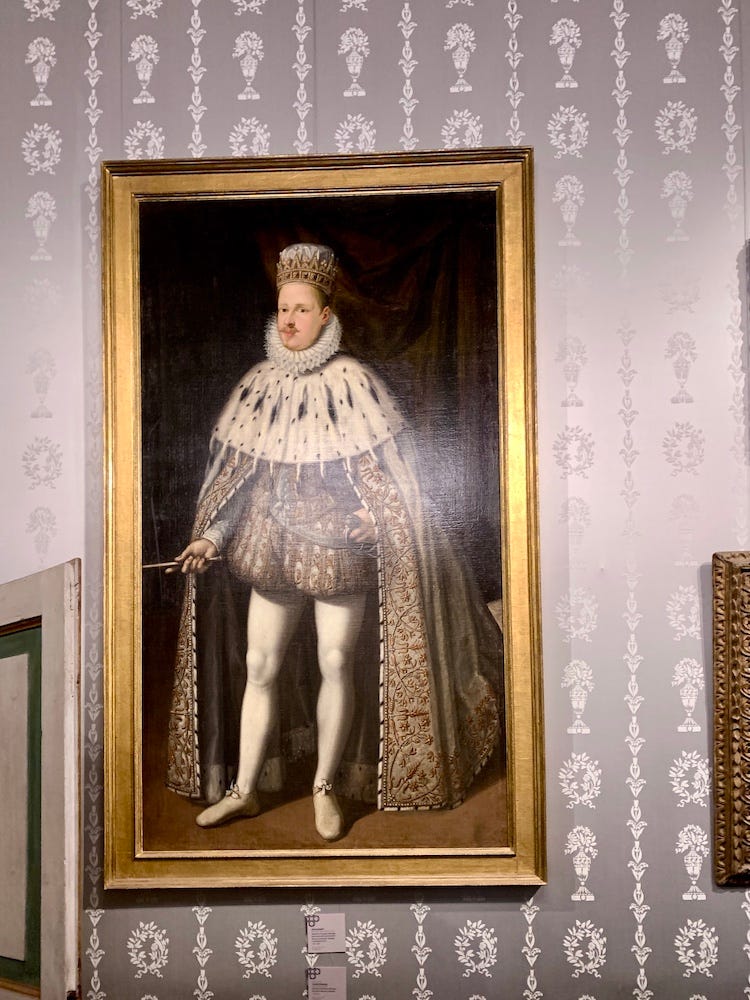
Suffice it to say, Vincenzo and Eleonora had several heirs that linked two key Renaissance dynasties (and you can hear the full story of how he proved his virility via the podcast Noble Blood). Their union began in the Palazzo Te, a palace built about two kilometers south of the Palazzo Ducale for Vincenzo’s grandfather, Federico II. It was there that the first Duke of Mantova was born; while entertaining Charles V, the Holy Roman Emperor3 elevated Federico from Marquess to Duke.
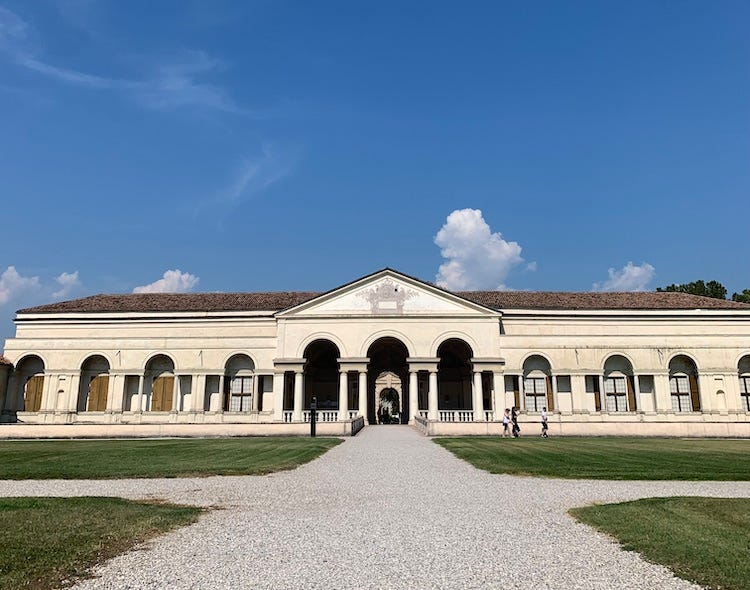
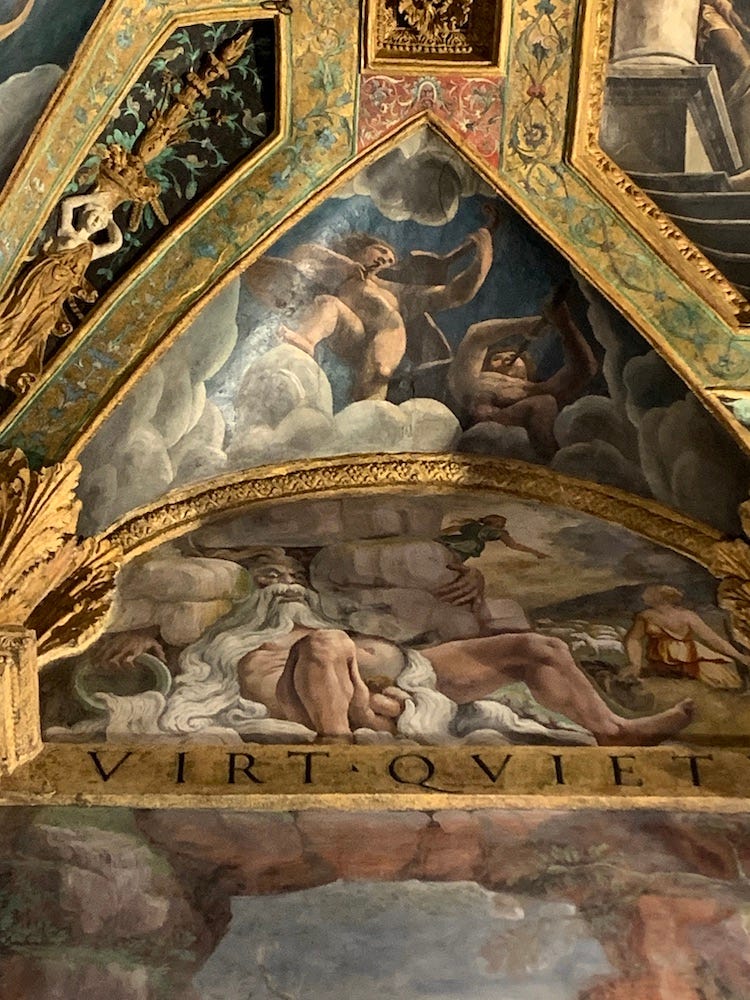
One of the rooms that left Charles V “completely awestruck” (according to one historian) when he visited Palazzo Te in 1530 was the Camera di Psiche, with its central focus on Apuleius’s myth of Psyche’s marriage to Cupid. In her book, The Performative Palace, Maurer writes:
“As he moved around the room, the unfolding story of Psyche on the ceiling and the images of mythological lovers and sensuous banquets on the wall invited Charles to take up varying positions and identities. A fresco of Jupiter and Olympia depicting the pair mid-coitus allowed the Emperor to see himself as the robust and virile King of the gods, and as Philip of Macedon, whose illicit gaze cost him his sight. Charles could even identify with Olympia, who grasps the fictive frame of the painting, penetrating the picture plane and entering into the physical space of the room. Charles was triumphant, condemned, and sexualized.”
It was in this same room that Eleonora de’ Medici had her welcome banquet, entering the Palazzo Te as a Medici and leaving it as a Gonzaga, making a bridal procession from there through the old city walls to the Palazzo Ducale.
In an essay on “The Timelessness of Rigoletto,” Peter Nichols writes about the atmosphere of “a society which maintains its tension by this constant threat of violence,” a threat that Eleonora would have felt entering a high-pressure marriage, rendered even more acute by the fate of her predecessor.
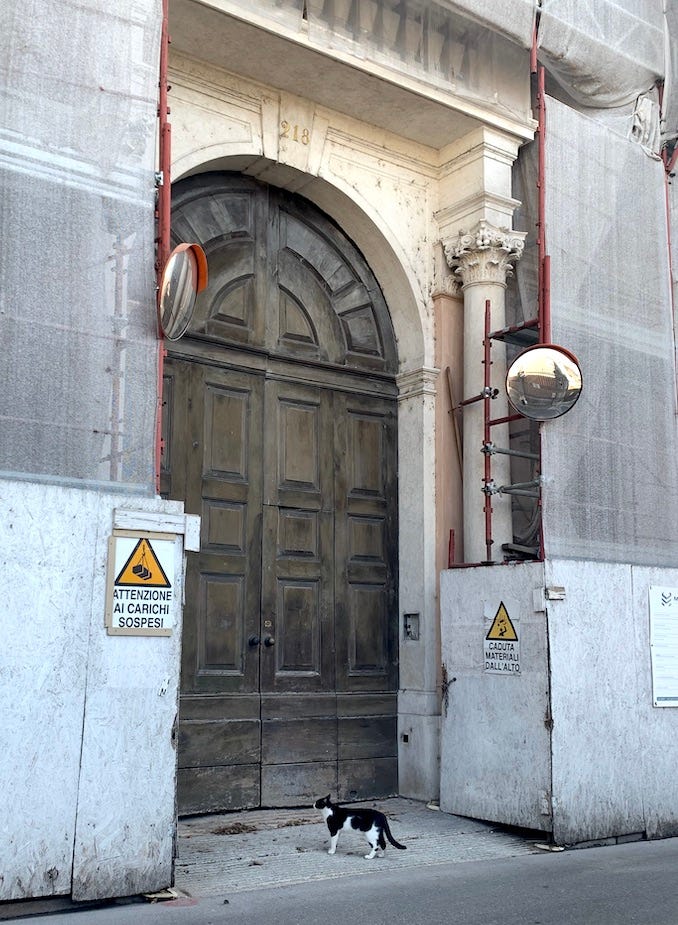
Some of the greatest violence is on display in the Duke’s court in Rigoletto. While there is the very literal violence proffered by Sparafucile (“dirty deeds done dirt-cheap,” Susan Graham once said of the assassin), experienced in the end by Gilda, the more pervasive violence is felt in the ether of the Palazzo Ducale.
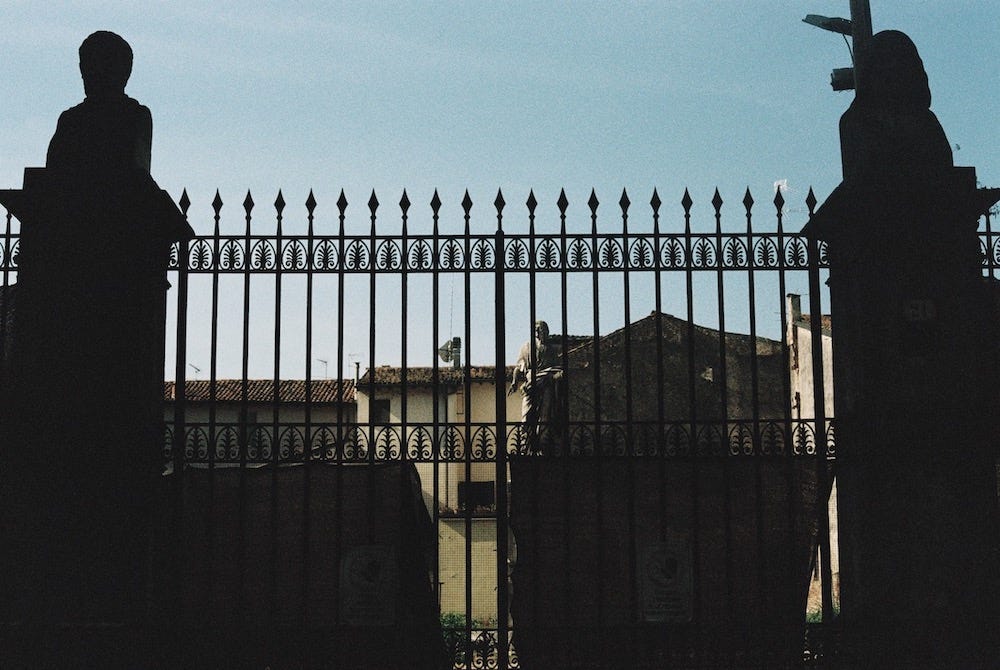
It’s one of the first things Rigoletto discusses in the opera, when the Duke, in his attempts to seduce the Countess Ceprano, bemoans the fact of Count Ceprano. Rigoletto jumps very quickly to beheading as a possible workaround. Perhaps he knew that the short tower one could see from the walkways of the Palazzo’s upper floors is what’s known today as the Sparafucile residence.
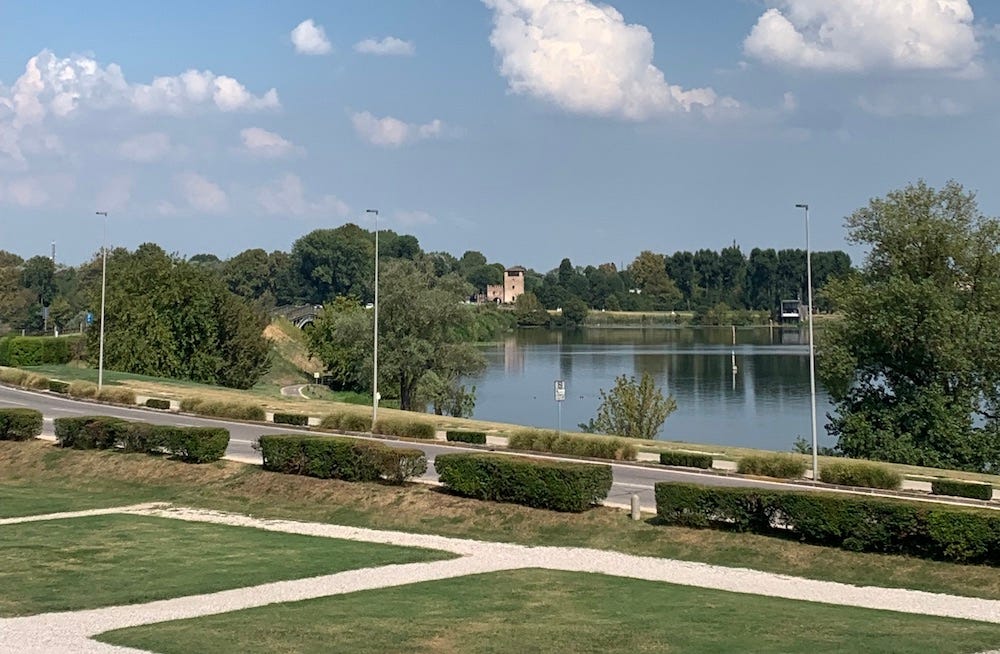
Nichols calls Mantova “a marvellous picture of a stagnant society, unchanging but kept alive by the tensions imposed on it… Without violence, it would become fossilized, but it is not changed by violence.” Rigoletto, he adds, “makes the fatal mistake of supposing that violence can be put to rational effect, to settle questions of right and wrong.”
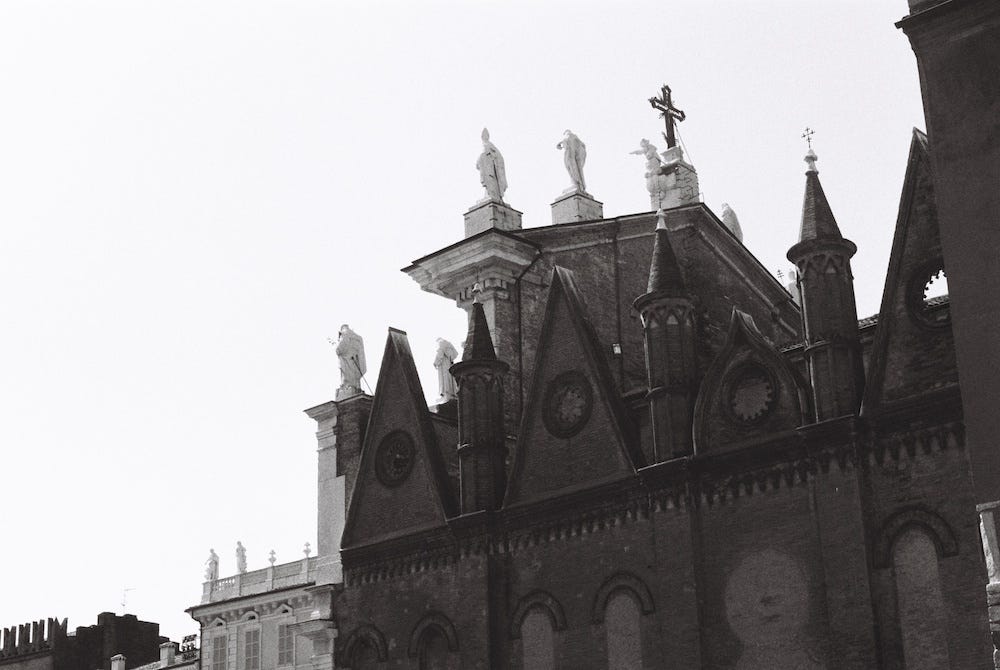
Rereading this last month, just a few days after seeing The Death of Klinghoffer, I was especially struck by this image of violence as a practical method of justice. The ENO Guide for Rigoletto was published in 1982, just a few years before the hijacking of the Achille Lauro that forms the basis of Klinghoffer, but certainly at a time where other attacks were familiar to anyone following the news cycle (especially in a United Kingdom that was 20 years into The Troubles and an Italy that was still in the grips of the Years of Lead).
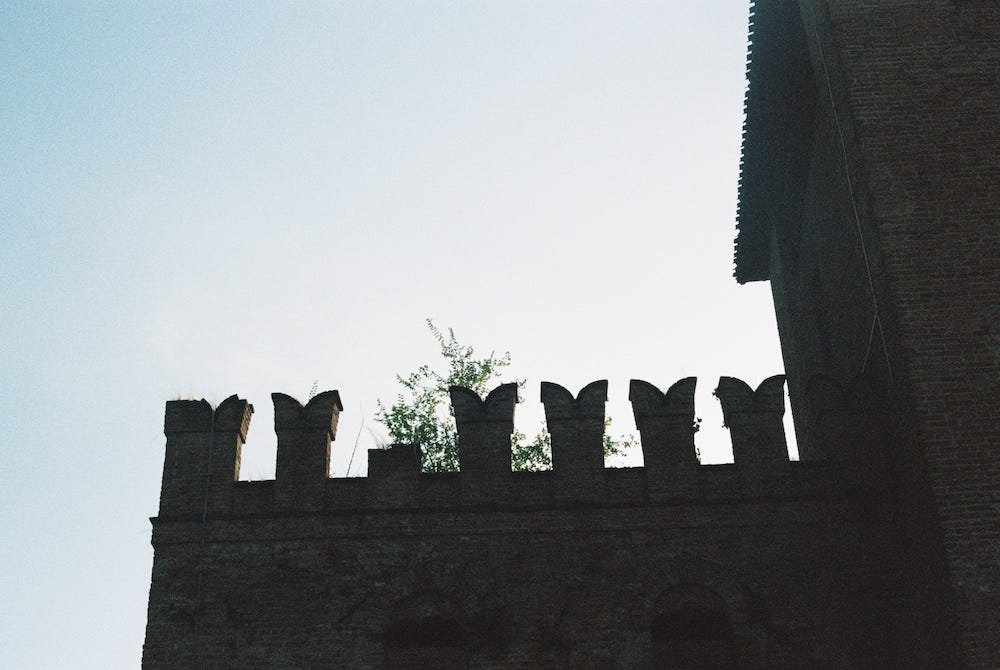
It makes sense, then, that Nichols makes the direct connection between Rigoletto and terrorism: “A modern terrorist would readily admit that violence cannot be used so precisely,” he concludes. “Rigoletto should have known that violence is an imprecise weapon. In the event, the weapon explodes in his hand.”
Of course, we can say that Rigoletto falls far short of meeting the criteria of a terrorist. The UN’s Office of the High Commissioner for Human Rights says—at minimum—“terrorism involves the intimidation or coercion of populations or governments through the threat or perpetration of violence, causing death, serious injury or the taking of hostages.”
But another description of terrorism I read in my Klinghoffer research describes it as a form of asymmetric warfare, when one side of a conflict relies on this level of violence as their only recourse against a more powerful enemy. That dynamic is at the core of Rigoletto, who also exercises what could be staged as an intimidating and coercive amount of control over Gilda: He isolates her from society, conceals her identity, controls her movement, and ultimately instrumentalizes her in his plot against the Duke.
This is the tragic irony of Verdi’s world. Rigoletto tries to break free of Mantova’s violence, but he’s already internalized its logic. In a court that runs on humiliation, coercion, and the threat of force, even private love becomes possessive, strategic, and paranoid. Violence spreads outward, reproducing itself through everyone it touches. Despite this, by the end of the opera, the Duke remains untouched, Mantova remains unchanged, and the only people destroyed are the ones who tried to escape the system.
This also places the source material for Rigoletto in connection to several other operas, including another Verdi heavy-hitter: Francis I was the brother of Marguerite of Navarre, whom we meet in Meyerbeer’s Les Huguenots. He was also the bitter rival of Emperor Charles V, the grandfather of Don Carlo, and an ally of Pope Clement VII, who has a cameo in Berlioz’s Benvenuto Cellini.
At the risk of writing a very pedantic footnote, I feel like Mantova isn’t that much more difficult than its exonym, so I use the original spelling but quote Simon’s use of “Mantua” since it’s also a part of the book’s title.
Of course, this is the same Charles V from Don Carlo.
Thanks for this double-tour, all of it, the text and detail images, Diana/Selene among the stars, Rubens corner, etc
What a lovely city is Mantova! We heard tell that not all that many years ago, the typical Italian hadn’t heard of the place. (Can one say it has arrived when Ted Talks are given there? ;-) You bring so many of it jewels to us! Wonderful piece!